
How to Record Accrued Expenses Using Journal Entries

Accrued expenses are costs incurred but not yet invoiced — record them as journal entries at period end. At the end of the accounting period, identify any…

Last updated

Quick answer

To record an accrued expense in CFO12, identify costs incurred but not yet billed at period end, then create a journal entry under Finances → Journal Entries dated the period end. Debit the relevant expense account, credit Accounts Payable or an accrued liabilities account, and post it. Create an offsetting entry when the bill arrives, if needed.

Accrued expenses are costs incurred but not yet invoiced — record them as journal entries at period end.
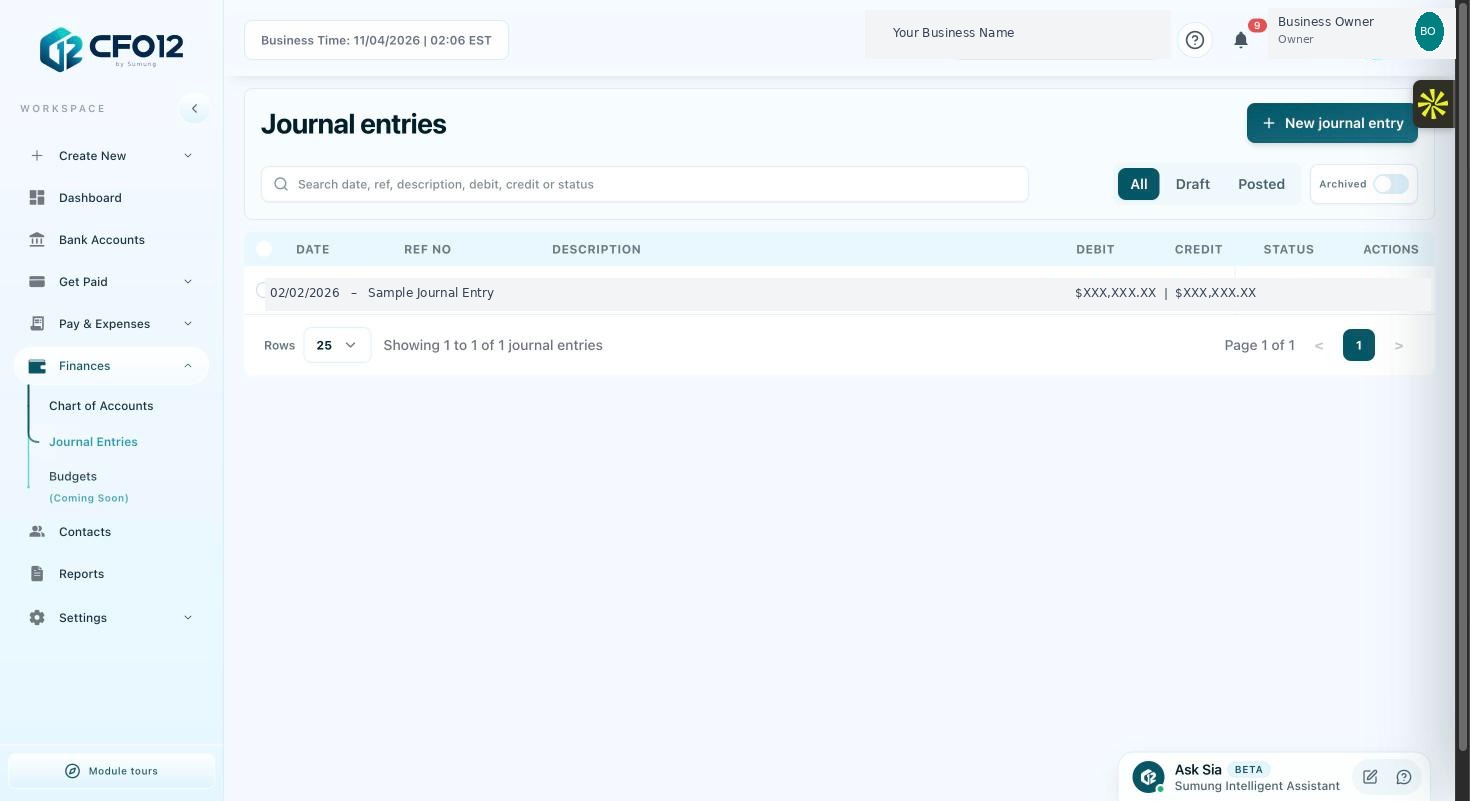
How to Record Accrued Expenses Using Journal Entries screenshot

What You Can Do

  1. At the end of the accounting period, identify any expenses incurred but not yet billed.
  2. Create a journal entry with the period end date.
  3. Debit the relevant expense account for the accrued amount.
  4. Credit Accounts Payable or an accrued liabilities account.
  5. Post the entry. When the bill is received in the next period, create an offsetting entry if needed.

💡 Accruals ensure expenses are matched to the correct period in your Profit & Loss report.

Related Articles

Was this article helpful?

Your feedback helps us improve our documentation.

Frequently asked questions

Why record an accrual instead of waiting for the bill?

Accruals match expenses to the period they were incurred, so your Profit & Loss for that period is accurate.

How is a prepaid expense different from an accrued one?

A prepaid expense is paid in advance: debit a prepaid asset account and credit the bank, then each month debit the expense and credit the prepaid asset for the portion used.

What other entries belong in a month-end close?

At month end, create entries for accruals, prepaid amortisation and depreciation, post all drafts, check the General Ledger and run Profit & Loss and Balance Sheet reports.

Complete guideJournal entries and the general ledger: CFO12 guide