
What Is a Journal Entry in CFO12?

A journal entry is a manual accounting record that uses debits and credits to record a financial transaction. A journal entry has two or more line items — each…

Last updated

Quick answer

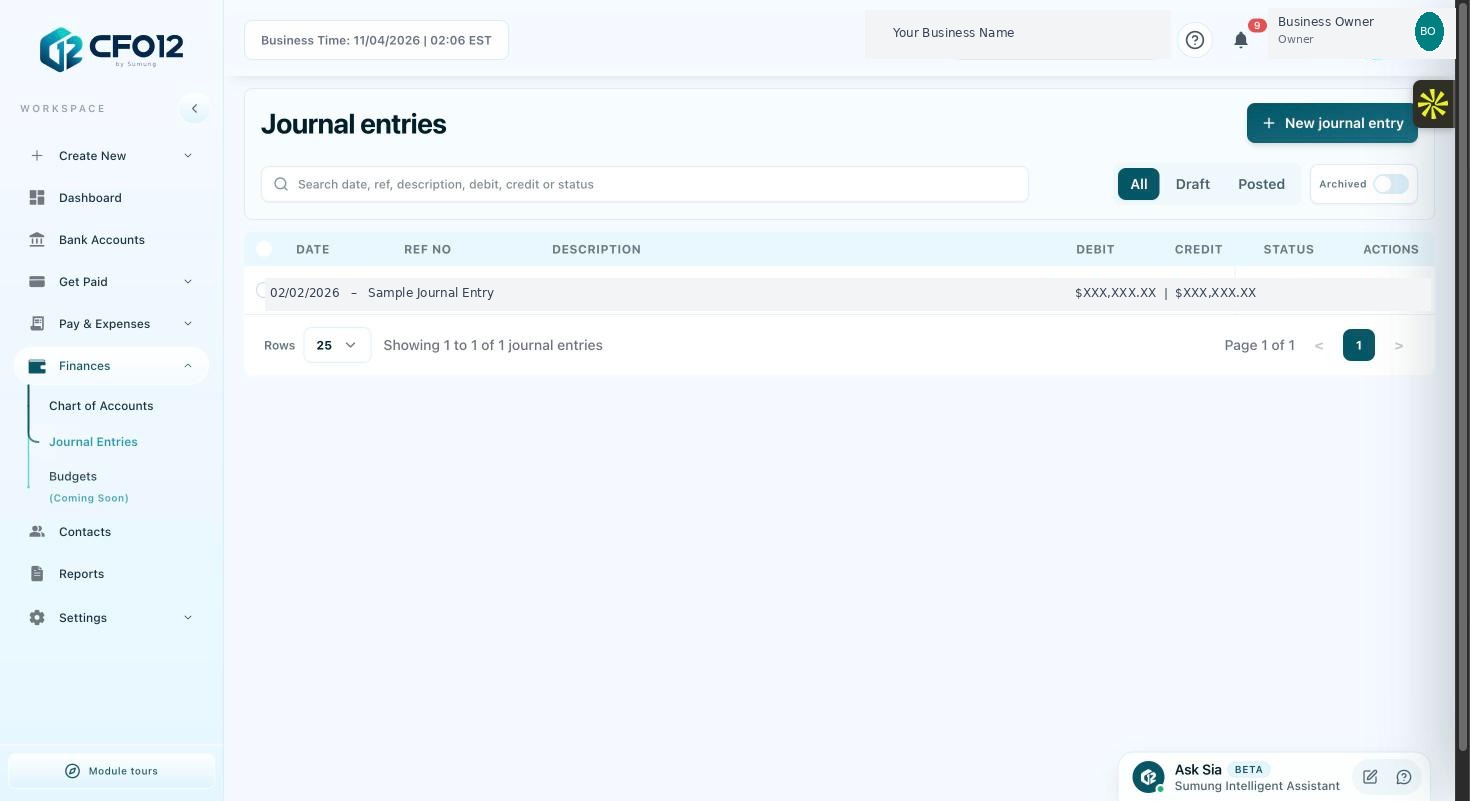
A journal entry in CFO12 is a manual accounting record that uses debits and credits to record a transaction. It has two or more line items, each with an account and a debit or credit amount, and total debits must equal total credits. Create them under Finances → Journal Entries for items like depreciation and adjustments.

A journal entry is a manual accounting record that uses debits and credits to record a financial transaction.
What Is a Journal Entry in CFO12? screenshot

What You Can Do

  1. A journal entry has two or more line items — each with an account, a debit amount, or a credit amount.
  2. Total debits must always equal total credits in a valid journal entry.
  3. Journal entries are used for transactions not automatically created by invoices or bills, such as depreciation and adjustments.
  4. They are created under Finances > Journal Entries.

💡 Every journal entry must balance — debits must equal credits. Ensure debits equal credits before posting.

Related Articles

Was this article helpful?

Your feedback helps us improve our documentation.

Frequently asked questions

Which accounts can I use on a journal entry line?

Any active account from your Chart of Accounts is available in the account dropdown.

How many lines does a journal entry need?

At least two. A simple entry has one debit line and one credit line; more complex entries can have more lines.

When should I use a journal entry instead of a bill or invoice?

Use a journal entry for transactions that invoices or bills do not create automatically, such as depreciation, accruals and other adjustments.

Complete guideJournal entries and the general ledger: CFO12 guide